
The Fallow Year: The Case for Strategic Professional Stillness Before Your Next Act
In agricultural science, there is a principle known as the Law of the Minimum, which states that growth is dictated not by the total resources available, but…
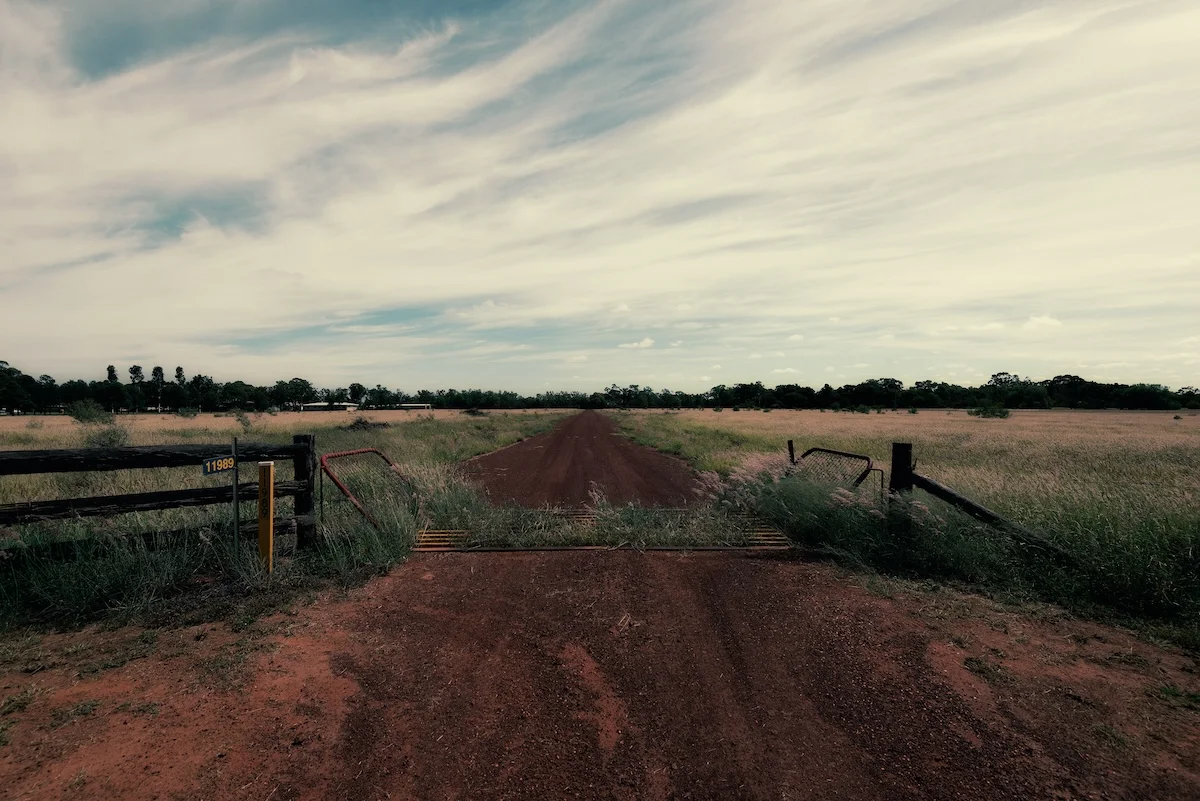
In agricultural science, there is a principle known as the Law of the Minimum, which states that growth is dictated not by the total resources available, but by the scarcest one. We often believe our secondary professional acts are limited by a lack of capital, a fading network, or a shift in the market, but for the person standing on the far side of a major exit or a transformative burnout, the scarcest resource is almost always the microbial health of their own ambition. We are a species that has learned to over-farm our internal landscapes, pressing for a harvest in every season until the soil of our identity is turned into gray, unproductive dust.
The Weight of an Empty Calendar
Hands pressed into the cool, damp earth of the backyard garden, I am pulling weeds that have no names. My fingernails are stained a deep, permanent crescent of black, and the skin of my palms is beginning to map out a new kind of geography—one defined by friction and soil rather than the smooth glide of a pen or the steady rhythm of a keyboard. Over the fence, the neighbor’s lawnmower drones on, a mechanical heartbeat reminding me of the productive world moving at its usual clip. Somewhere beyond these wooden slats, there are meetings being chaired, strategies being iterated, and fires being fought.
But here, in this small patch of dirt, I am doing nothing that could be quantified on a spreadsheet.
For the first time in a decade, there is no one waiting for my approval. The silence is not a void; it is a physical weight, a heavy woolen blanket draped over my shoulders that I am not yet sure how to carry. When you have spent years defined by the velocity of your output, the sudden absence of momentum feels less like peace and more like a phantom limb. You reach for the pressure, the urgency, and the "critical" nature of your day, only to find the air empty. It is a profound, disorienting quiet—the kind that makes you realize how much of your internal music was actually just white noise.
The Panic of the Void
The immediate aftermath of a professional departure creates a vacuum, and nature, as they say, abhors a vacuum. Your instinct—honed by years of high-stakes achievement—is to fill that space before the "What do you do?" question at a dinner party becomes an indictment. You feel a frantic, rising need to tether yourself to a new "big thing," a new title, or a new venture, simply to avoid the perceived stigma of being idle.
This is the birth of the rebound role.
Like a person jumping into a new relationship to dull the sting of a heartbreak, we often leap into professional positions that mimic our old stressors under the guise of "fresh starts." We take the consulting gig that drains us in the same way the executive role did; we start the new company with the same frantic energy that broke the last one. We do this because we haven't given our internal soil time to recover. We are trying to plant corn in a field that was just stripped of its nutrients, wondering why the new crop looks yellow and brittle from the start.
"Identity is a sturdy coat until it becomes a straightjacket; the panic we feel in the quiet is often just the sound of the fabric tearing so we can finally breathe."
When you no longer have a title to hide behind, you are forced to look at the person left standing in the clearing. For many of us, that person is a stranger. We have spent so long being the "Director of," the "Founder of," or the "Expert in," that we have forgotten how to be the person who simply is.
The Wisdom of the Unplanted Field
Traditional wisdom suggests that if you aren't moving forward, you are falling behind. But the ancient practice of the fallow year tells a different story. In regenerative agriculture, a field is intentionally left unplanted for a season—not because the farmer is lazy, but because the soil is exhausted. During this period, the land isn't "doing nothing." Beneath the surface, complex biological processes are at work. Nitrogen is being fixed; organic matter is breaking down; the microbial life that sustains future growth is being replenished.
A fallow year is not a year wasted; it is a year of restoration.
Human ambition requires this same cycle of replenishment. Strategic stillness is not the absence of progress; it is the vital precursor to a more nutrient-dense second act. To refuse the fallow season is to guarantee a future of diminishing returns. You may be able to force a crop through sheer willpower and synthetic fertilizers—more caffeine, more "hustle," more performative busyness—but the fruit will lack the depth and flavor of a harvest grown from rich, rested earth.
The Ghost of the Former Self
There is a specific kind of grief that comes with outgrowing your own success. Imagine standing in a library where every book is written in a language you used to speak perfectly, but you suddenly find yourself unable to translate. You walk the aisles, seeing the familiar spines of your previous life: the leadership jargon, the industrial benchmarks, the high-level networking. You try to pull a familiar volume off the shelf—perhaps a proposal or a partnership—only to realize your hands are too tired to hold the weight.
You realize, with a sinking clarity, that the person who could carry those books no longer exists.
The version of you that thrived on the 6:00 AM adrenaline and the midnight deadlines has dissolved into the ether. But because the new version of you hasn't been written yet, you feel like a ghost in your own story. You are caught in the "liminal space"—the hallway between the room you just left and the one you haven't yet found the key for.
It is tempting to try to resurrect the old self. We put on the old suit, we use the old language, we try to conjure the old fire. But you cannot go back to a version of yourself that the land has already reclaimed. The ghost of your former self is not a haunting; it’s an invitation to let the dead things settle into the earth so they can become the compost for what comes next.
A Three-Stage Model for Meaningful Pause
If we view the fallow period as a structured necessity rather than a shameful gap, we can navigate it using the Fallow Framework. This isn't a productivity system—it’s a restoration cycle.
1. De-compacting
In a field, soil becomes compacted by the heavy machinery of the harvest, making it impossible for roots to penetrate. Professionally, this is the weight of previous expectations and the "shoulds" you’ve carried. De-compacting is the process of deliberately releasing the pressure. It involves saying no to "quick coffees" that feel like interviews and moving away from the metrics that used to define your worth. It is the stage of letting the ground breathe.
2. Cover-Cropping
Farmers don't always leave a fallow field completely bare; they often plant "cover crops" like clover or rye. These aren't meant for harvest; they exist solely to protect the soil and add nutrients. In your life, these are low-stakes, high-joy activities. It’s the woodworking class, the long-distance hiking, or the deep dive into a subject—like mycology or ancient history—that has zero "market value." These activities nourish the soul without the pressure of a deliverable.
3. Soil Testing
Once the nutrients are returning, you begin to quietly observe what naturally takes root. You don't plant a whole orchard; you watch for the small, green shoots of curiosity. Which ideas keep returning when you aren't trying to think of them? Which conversations leave you feeling energized rather than drained? This is the stage of Unearthing the Embers to see what is actually capable of growing in this new version of your life.
Cultivating Your Quiet Season
To protect this fallow period, you must become a steward of your own boundaries. Start by auditing your "urgency triggers." Identify the specific social or professional situations that make you feel the instinctive need to justify your time. For many, it’s the casual "So, what’s next for you?" question during a weekend gathering.
Practice a "no-pitch" rule. When asked what you are doing, allow yourself the grace of a vague but honest answer: "I’m letting the fields lie fallow for a while." It is amazing how quickly people stop pressing when they realize you aren't looking for a job—you’re looking for yourself.
Another practical tool is the Small Interest Log. Each day, write down three things that sparked genuine curiosity, regardless of how unrelated they are to your past. Perhaps it was the way the light hit a certain building, a line in a poem, or a question about how the local power grid works. This isn't a "to-do" list; it's a "to-notice" list. Over time, these entries become the data points for your next act. Unlike the frantic search for a new role, this is a slow accumulation of Contextual Habit Building that respects your actual energy levels.
"Stillness is not a plateau; it is the deep, tectonic shift of a mountain range being born beneath the surface."
The Audit of Your Essence
Eventually, you must look at the residue. If you were told tomorrow that you were never allowed to return to your previous industry—if the doors were barred and the credentials revoked—which parts of your daily rhythm would you fight to keep? And which parts are you only holding onto out of habit, or the fear of being forgotten?
We often carry the "artifacts" of our old lives long after they’ve lost their utility. We keep the stress-inducing news alerts, the professional memberships we no longer care about, and the "busywork" rituals that make us feel important but leave us empty. Identifying these is a form of Subtractive Accountability—the art of protecting your growth by removing what no longer serves the soil.
What remains after the title is gone is your "essence." It might be a love for solving complex puzzles, a talent for mentoring, or a deep need for rhythmic, physical work. These are the hardy perennials of your character. They survived the burnout, the exit, and the silence. They are what you will build upon when the fallow year ends.
The Harvest Requires the Wait
The earth does not bloom all year round, yet we have built a culture that expects our careers to be a perpetual harvest. We have forgotten that the most beautiful things in the world require a period of dormancy. The oak tree doesn't grow in the winter, yet it is during the winter that its wood becomes dense and strong.
By choosing to lay fallow now, you aren't falling behind. You aren't losing your edge. You are ensuring that when your next season finally arrives, you have the depth to sustain it. My hands are still stained with dirt today, and the silence still feels heavy occasionally. But the ground beneath my feet is changing. It is becoming cooler, darker, and more alive.
It is finally becoming rich enough to grow something that lasts.
The transition from a life of utility to one of true calling is never a straight line; it is a cycle. If you feel the pull toward stillness, listen to it. The world can wait for your next act, but your soul cannot thrive on depleted soil. Give yourself the gift of a season unplanted. Trust that the nutrients are returning. Trust that the winter is work.
Design Your Next Season
If you find yourself in the quiet of a transition and aren't sure how to begin the restoration process, we’ve created tools to help you map the terrain. You don't have to navigate the void alone—sometimes the best way to find the next path is to sit together in the clearing for a while.
- Explore how to Design Your Year with an intention for stillness, not just output.
- Join a community of those building something meaningful from the ground up.
- Not sure where you are in the cycle? Discover your insights to see what your current energy is telling you.
Written by
Preston KanakPreston Kanak is a filmmaker, educator, and creative entrepreneur who is deeply passionate about building spaces rooted in authentic connection rather than surface-level networking. He believes in the power of shared purpose and the transformation that happens when people gather around what truly matters. His work and communities are shaped by the idea that life is meant to be lived with intention, curiosity, and heart. At his core, Preston is driven by wellness, creativity, and meaningful reflection. He comes alive when he’s exploring new ways to move his body, developing fresh ideas, or carving out quiet space to think and reconnect with himself. He thrives on variety and learning, while also valuing the stability that allows him to explore freely. Making a positive impact and seeing others resonate with his work is what keeps him energized and committed to his path. Preston is currently focused on The Living Year Project, an ongoing exploration of health, fitness, and sustainable habits designed to help people live each year with greater clarity, energy, and purpose. Through this work, he studies how small, consistent shifts can create powerful long-term change. His mission is to help others rediscover what lights them up and design lives that feel deeply aligned with who they are becoming.
Stay Updated
Get new articles in your inbox
No spam. Unsubscribe anytime.