
Unearthing the Embers: Identifying Your Core Drivers After Age 40
A light snow was falling the first time I realized I was ghostwriting my own life. I was sitting in a corner office with a view that many would envy,…
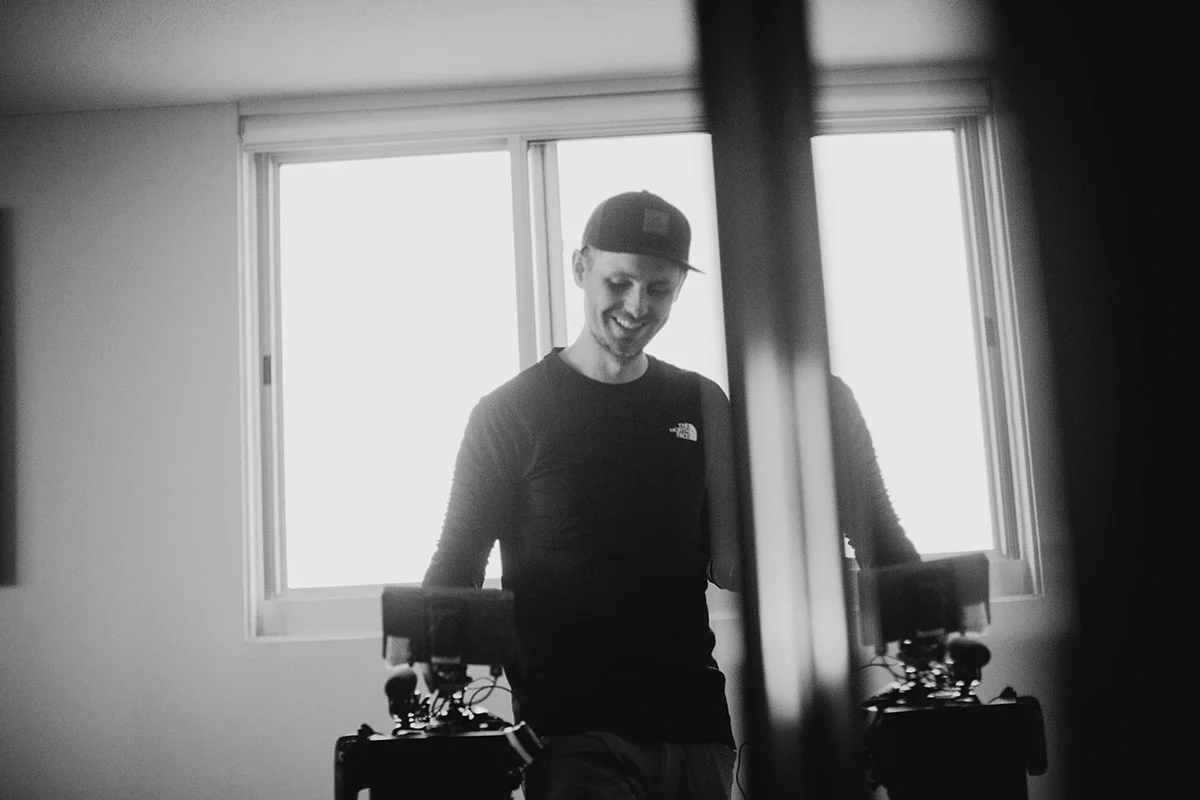
A light snow was falling the first time I realized I was ghostwriting my own life. Not from a corner office, but from behind a camera—standing on a set I had worked years to reach. The production was running smoothly. The clients were happy. The crew moved with confidence. By every external measure, things were working exactly as they were supposed to.
I had built a career telling stories for others. I knew how to frame a moment, how to guide emotion, how to make something feel meaningful on screen. From the outside, it looked like clarity. Momentum. Success.
But when I caught my reflection in a dark monitor between takes, I felt a strange distance from the person staring back. He looked competent. Experienced. Someone who knew how to solve problems, lead a team, deliver results. But he didn’t look present. It felt as though I was directing a life I wasn’t fully inside of—hitting marks, delivering lines, moving from project to project without ever hearing the quiet question underneath it all: Is this still yours?
It reminded me of a fire I once came across after a long night had passed. The flames were gone, replaced by a bed of gray ash that looked completely spent. But when you knelt close—close enough to feel the faint warmth still hiding there—and gently shifted the surface, a small glow revealed itself. A single ember, steady and patient, waiting for oxygen.
For many of us, especially as we move into midlife, life begins to look like that fire pit. We spend years building momentum—careers, identities, responsibilities—learning how to be reliable, capable, productive. We become experts at carrying weight. From the outside, everything appears solid. Established.
But somewhere along the way, the spark that once fueled our curiosity gets buried beneath expectation. We confuse motion with meaning. We mistake a full calendar for a full life. And slowly, almost imperceptibly, living turns into performing.
Then comes the quiet ache. Not a crisis. Not a collapse. Just a low, persistent signal—easy to ignore but impossible to silence—that the life we’re living no longer feels like an honest expression of who we are becoming.
It isn’t that the fire is gone.
It’s that the ember is waiting to be uncovered.
The Quiet Ache of the Accomplished
There is a specific kind of loneliness that comes with being "successful." It’s the feeling of standing at the center of a life you built, realizing you’ve become a stranger to the person who started the construction. We often call this a midlife crisis, but that term feels too loud, too cliché. It isn't always a dramatic explosion; more often, it is a slow, structural settling. It’s the realization that you have become a passenger in your own skin.
For years, we tell ourselves that once we reach the next milestone—the promotion, the liquid net worth, the kids graduating—we will finally have the time to reconnect with ourselves. But the milestone passes, and the ache remains. This is because we’ve been operating under the "performance-based" identity. We define our value by our output, our efficiency, and the social proof we gather like badges on a uniform.
Yet, beneath the performance, there is a "hum." It’s that feeling you get on a Sunday evening or in the quiet space between meetings. It’s the sense that something is missing, not because you haven't achieved enough, but because you’ve achieved things that don’t actually belong to you. You’ve become an expert at playing a role, but the actor behind the mask is starving for air. The Golden Cage: Why Feeling 'Successful' Often Feels Like Being Trapped isn't just a metaphor; it’s a lived reality for those of us who forgot that the door was never locked—it just became too heavy to push.
The High Cost of Performance-Based Identity
When your identity is tied to your performance, your self-worth becomes a moving target. You are only as good as your last win, your last quarter, or your last accolade. This works well enough in our twenties and thirties when we have the raw energy to keep the pace. But as we cross the threshold of forty, the scale of the "Performance Trap" begins to shift.
In the first half of life, we are often driven by acquisition—attaining status, building security, establishing our place in the world. We optimize our lives for efficiency. We learn to ignore the "unproductive" parts of ourselves—the parts that like to draw, or hike without an altimeter, or read poetry that has nothing to do with strategic management. We sideline our internal compass in favor of an external GPS that points toward "more."
The cost of this optimization is a profound disconnection. We lose the ability to hear our own voices because we’ve been shouting our resumes for so long.
"We spend the first half of our lives building a container, and the second half realizing we've forgotten to put anything inside of it."
This is the moment where the transition from status to substance becomes non-negotiable. If we don’t make the shift, we risk becoming monuments to ourselves—impressive to look at from the outside, but hollow and cold within. The pain point isn't that we’ve failed; the pain is that we’ve succeeded at a game we no longer want to play.
From Acquisition to Recovery
The mistake many people make when they reach this crossroads is thinking they need to invent a brand-new life. They think "purpose" is something they have to go out and buy, or "find" at a retreat in the desert. They look for new passions to spark a new fire.
But purpose isn't something you invent in a boardroom or a brainstorm; it’s something you recover.
If you want to find your way back to yourself, you don’t need to look forward—you need to look down at the hearth. You need to start an archaeological dig. You are not looking for something "new"; you are looking for the "embers"—those core drivers and dormant interests that were sidelined during the building years. These are the parts of you that existed before the world told you who to be. They are the things you did for the sheer joy of doing them, before "value creation" became the metric of your days.
Moving from a performance-based identity to a contribution-centric one requires us to stop asking, "What does the world want from me?" and start asking, "What makes me feel like I am participating in my own life?" This might involve some financial guardrails if you’re considering a major shift, but more often, it’s about a subtle re-orientation of how you show up in the world you already inhabit.
The Architect Who Forgot He Could Build
Take David, for example. David was a high-powered corporate attorney in Chicago. For twenty-five years, he had been the guy who closed the deal, the one who found the loophole, the one who won the case. He was, by every external measure, at the top of his game. And yet, he was exhausted. Not the kind of exhaustion that is cured by a week in Tulum, but a soul-deep fatigue that made every Monday feel like a heavy weight.
When we sat down together, I asked him a question he hadn't considered in decades: "What did you do with your hands before you started holding a briefcase?"
He laughed, a bit wistfully. "I built things," he said. "Models, clocks, furniture. I loved the way pieces fit together. I loved the patience it required to make something precise. But you can’t make a living building birdhouses, can you?"
David thought finding his "spark" meant he had to quit the law and become a carpenter. But for most of us, that isn't realistic or even necessary. Instead, we worked on identifying the essence of that ember—the "core driver" of intricate craftsmanship.
David realized his true frustration wasn't with the law itself, but with the "performance" of being a litigator. He shifted his focus. He began to see his role not as a combatant in court, but as an architect of careers. He started mentoring junior associates, not by telling them how to win, but by showing them how to build a legal strategy with the same precision he once used on his clocks. He brought his "builder" energy into his practice, re-enchanting his career without having to burn the building down.
He stopped performing "The Great Lawyer" and started contributing as "The Master Builder." The warmth came back.
The Legacy Hearth: A Three-Step Archeology
How do you begin this unearthing? It requires a different kind of effort than the "grind" of your thirties. It requires a gentle hand. I call it the Legacy Hearth framework—a way to tend to the fire without overwhelming it.
1. Excavation (Identifying Childhood Fascinations)
The first step is to clear away the ash. Think back to who you were between the ages of seven and twelve. At that age, you were old enough to have interests but young enough not to care if they were "useful." What were the things you did for hours without being asked?
Did you collect things? (The driver might be Organization or Curation.)
Did you make up stories? (The driver might be Narrative or Imagination.)
Did you take things apart? (The driver might be Understanding or Problem-solving.)
Did you lead the neighborhood kids on adventures? (The driver might be Vision or Leadership.)
2. Oxygenation (Giving Interests Small Amounts of Time)
An ember needs air to become a flame, but too much air will blow it out. Don't try to turn your dormant interest into a "side hustle." Don't try to monetize it. Don't even try to be "good" at it. Just give it oxygen. If you used to love drawing, buy a sketchbook and spend fifteen minutes sketching the mundane objects on your desk. Don't show anyone. The goal is to feel the sensation of doing something for its own sake. You are training your nervous system to remember what "flow" feels like.
3. Integration (Connecting Interests to Your Current Standing)
Once you’ve identified the driver and given it some air, you look for ways to weave it into your current life and legacy. How can your love of storytelling change the way you communicate with your team? How can your love of "taking things apart" help your family navigate a difficult transition? This is where you move from "Status" (what you are) to "Substance" (who you are).
The Dormancy Audit: Your First Excavation
To bridge the gap between philosophy and practice, I invite you to conduct a brief Dormancy Audit. This isn't a test; it's a conversation with your younger self. Grab a piece of paper—something physical, something with texture—and answer these three prompts:
The Time-Traveler's List: List three activities you did as a child that made you lose track of time. Be specific. Not just "playing outside," but "building dams in the creek" or "drawing maps of imaginary islands."
The Core Verb: Look at your greatest professional win. Strip away the title and the money. What was the central verb you were doing? Were you connecting people? Clarifying complex information? Protecting a vulnerable party? Synthesizing disparate ideas? That verb is often your most resilient ember.
The Non-Productive Hour: Schedule sixty minutes this week for an activity that has absolutely no "output." No one will see the result. It will not earn you money. It will not improve your resume. It is purely for the warmth it provides. If you're stuck, use one of our insights tools to help narrow down where your natural curiosities lie.
"Identity is not a fixed destination, but a fire we must learn to tend as the weather of our life changes."
What Stays Warm When the Lights Go Out?
Imagine, for a moment, that tonight the theater goes dark. The lights of the office are turned off, the emails stop coming, and the social invitations dry up. If you stripped away your title, your salary, and your social standing—those external layers of the "Performance Mask"—what parts of your character would still feel warm to the touch?
This is often a frightening question for those of us who have lived for the applause. But it is also the most liberating question you will ever ask.
Perhaps the thing that stays warm is your curiosity. Perhaps it is your capacity for deep empathy, or your ability to find humor in the absurd. Perhaps it is the way you listen. These are your true embers. They are the substance of your contribution to the world, and they have nothing to do with your performance. They are the things you offer simply by being who you are.
If there is something you have always wanted to try, but felt it was "too late" or "too unproductive" to pursue, consider that this interest might be a signpost. It is your life asking you to stop performing and start participating.
Tending the Long Burn
The second half of life isn't about building a bigger fire. We've already done that. We've seen the roaring flames of our ambitions, and we've felt the scorch of burnout. The second half is about tending the long burn—ensuring the fire you have is burning the right fuel.
We often think that once the flame dies down, the fire is over. But any seasoned camper knows that the embers are where the real heat lives. The embers are what cook the food; the embers are what keep you warm through the coldest part of the night.
Your original spark hasn't gone out. It hasn't been extinguished by twenty years of middle management or the weight of a mortgage. It is simply waiting. It is waiting for you to clear away the ash of who you thought you had to be. It is waiting for you to breathe life into it once more.
You don't need a map for the next twenty years. You only need enough light to see the next step. And that light is already within you, glowing softly beneath the surface of your busy life. It’s time to stop performing and start living from the heat of what remains.
Start Your Excavation
The shift from a performance-based identity to one of substance doesn't happen overnight. It is a slow, intentional process of rediscovery. If you’re feeling the pull to unearth your own embers, we invite you to design your year with our free assessment tool. It’s a simple way to begin identifying the core drivers that have been waiting for their turn to shine.
Your story isn't over—the second act is just beginning, and this time, the heat is yours to keep. If you want to dive deeper into this journey with a community of like-minded explorers, explore our features and see how we can help you tend your fire.
Written by
Preston KanakPreston Kanak is a filmmaker, educator, and creative entrepreneur who is deeply passionate about building spaces rooted in authentic connection rather than surface-level networking. He believes in the power of shared purpose and the transformation that happens when people gather around what truly matters. His work and communities are shaped by the idea that life is meant to be lived with intention, curiosity, and heart. At his core, Preston is driven by wellness, creativity, and meaningful reflection. He comes alive when he’s exploring new ways to move his body, developing fresh ideas, or carving out quiet space to think and reconnect with himself. He thrives on variety and learning, while also valuing the stability that allows him to explore freely. Making a positive impact and seeing others resonate with his work is what keeps him energized and committed to his path. Preston is currently focused on The Living Year Project, an ongoing exploration of health, fitness, and sustainable habits designed to help people live each year with greater clarity, energy, and purpose. Through this work, he studies how small, consistent shifts can create powerful long-term change. His mission is to help others rediscover what lights them up and design lives that feel deeply aligned with who they are becoming.
Stay Updated
Get new articles in your inbox
No spam. Unsubscribe anytime.