
The Intellectual Sanctuary: Curating Your Inputs for Sustained Deep Thinking
What is the actual cost of the last hour you spent "winding down"?
What is the actual cost of the last hour you spent "winding down"?
If you look closely at the ledger of your mental energy, you might find that your attempts at recovery are actually high-interest loans you can’t afford to repay. We’ve been told that the antidote to a grueling work week is a complete cessation of effort—a collapse into the soft upholstery of passive entertainment. But if that were true, why do you wake up on Monday morning feeling like a haunted house? Why does a weekend of "doing nothing" often leave us with a buzzing behind the eyes, a frantic internal weather that no amount of sleep seems to clear?
The reality we rarely admit is that our brains don't actually want a vacuum; they want a sanctuary. When we simply stop working without choosing what to put in that empty space, the world rushes in to fill it with the cheapest, loudest, and most fragmented neon light it can find. We aren’t just tired in the way a battery is drained; we are cluttered in the way a hard drive is fragmented. We are vibrating at the frequency of a thousand tiny, uninvited inputs, and "rest" has become just another word for "silent consumption."
The 34-Gigabyte Weight of Modern Rest
We are living through a biological mismatch that no amount of deep-breathing apps can solve on their own. Researchers have estimated that the average person today processes roughly 34 gigabytes of information every single day. To put that in perspective, that’s enough data to crash a high-end laptop from a decade ago, and we are asking a piece of hardware—the human wetware between our ears—that hasn't had a significant upgrade in fifty thousand years to handle the load.
This weight isn’t composed of deep wisdom or architectural beauty. It’s a silt of "micro-content": headlines you didn't ask for, notifications that provide no value, the secondary stress of a stranger's opinion, and the aesthetic roar of a thousand different brands competing for a fractional second of your gaze. When you feel "burned out," it’s often not because you’ve worked too hard. It’s because the cognitive tax of processing this junk-data has depleted your reserves.
Your brain is a meaning-making machine. It cannot simply "ignore" a flickering screen or a pile of mail or a buzzing pocket. It has to categorize, evaluate, and dismiss every single stimulus. By the time you sit down to actually think about your life—to consider unearthing the embers of what actually matters to you—your "processor" is already running at 99% capacity just trying to keep the background noise at bay.
The Vacuum of Passive Recovery
We have been sold a version of recovery that is entirely subtractive. We think that by removing the "work," we automatically invite the "peace." But a vacuum is a volatile thing. If you create an empty afternoon without a conscious architecture for it, you haven't created a meadow; you’ve created a sinkhole.
"True rest is not the absence of movement, but the presence of rhythm. It is the shift from being a spectator of the noise to being a curator of the light."
When we fall into "passive recovery"—the mindless scroll, the background hum of a show we’ve seen four times, the ritual of checking emails "just in case"—we are still consuming. We are just consuming low-quality nutrients. It is the cognitive equivalent of trying to recover from a marathon by eating nothing but corn syrup. It tastes like something in the moment, but an hour later, the trembling in your nerves is worse than when you started.
This is why "Netflix and chill" often feels more like "Netflix and wilt." Your brain is still working to process the narrative, the blue light, and the rapid cuts, but because there is no personal agency involved, there is no "meaning-to-noise" ratio. You are being acted upon, rather than acting. And for a high-achiever or a deep thinker, being a passive vessel is a refined form of torture that we’ve mistaken for a hobby.
From Vacancy to Curation
To move past this, we have to stop thinking about "time off" and start thinking about an "Intellectual Sanctuary." This isn't a physical room (though it can be); it’s a deliberate strategy of curation. It’s the realization that your attention is the only true currency you possess, and you are currently letting a thousand different algorithms pick your pocket.
Restoration isn't found in the cessation of activity, but in the engagement with activities that offer a high Energy ROI. Think about the last time you were truly absorbed in something tactile—kneading bread, sketching a tree, or finally reading that heavy, cloth-bound history book that’s been sitting on your nightstand. You weren't "doing nothing." In fact, your brain was working quite hard. But because the input was singular, slow, and high-quality, you finished the task feeling larger than when you began.
This is the shift from vacancy to curation. It’s the move from why most productivity systems stop working (because they focus on output) to a system that focuses on the quality of the intake. If you want to think deeply, you have to feed the fire with something more substantial than digital kindling.
The Architecture of an Intentional Day
Imagine, for a moment, walking through a day where your environment felt like an external hard drive for your soul.
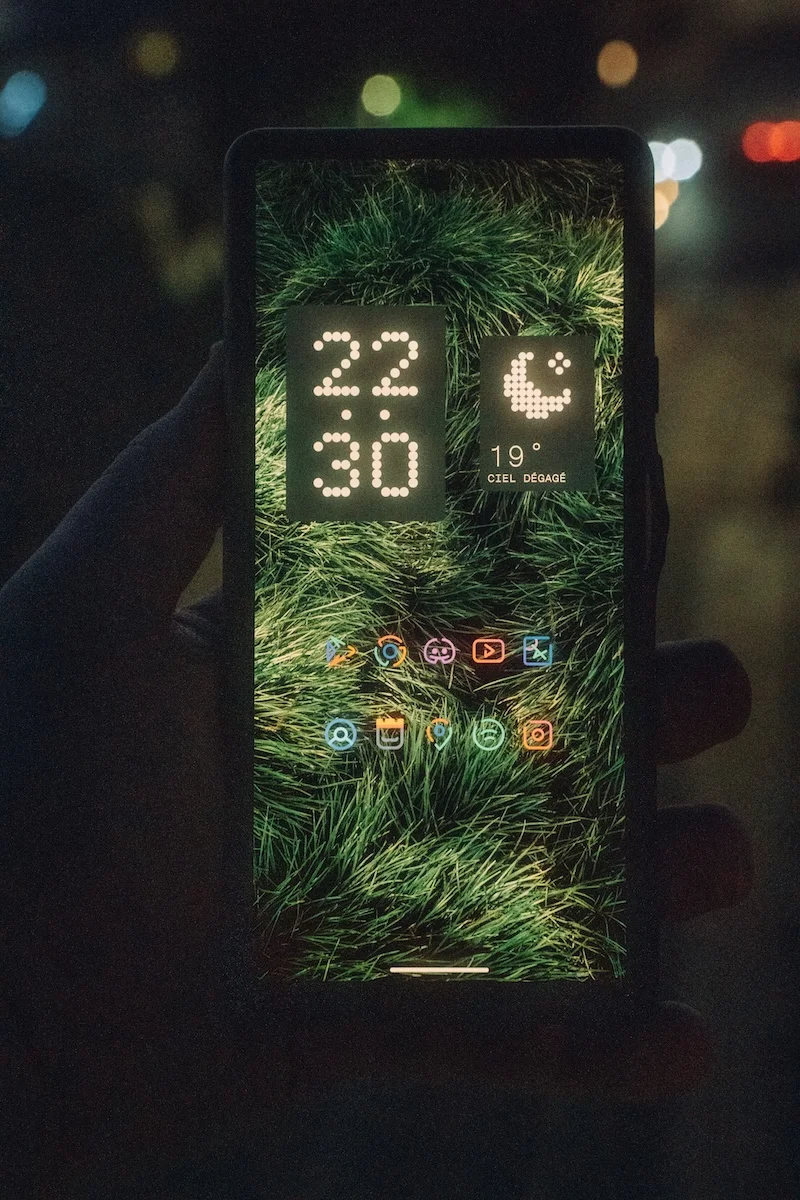
When you wake up, your eyes don't meet a piece of glass that immediately connects you to the anxieties of seven billion strangers. Instead, they meet a window, or a piece of art you chose because it reminds you of a specific mountain you once climbed. The books on your shelf aren't there for decoration or "status"; they are a choir of voices you trust, waiting to be consulted. Your digital space is sparse—the icons on your phone are limited to what helps you create, not what helps you escape.
In this sanctuary, your environment acts as a protective layer. It filters out the non-essential before it ever reaches your nervous system. You move through your hours with a sense of "selective stewardship," understanding that saying ‘no’ to good things is the only way to protect the great ones.
This isn't about some monastic ideal of perfectly white walls and silence. It’s about ensuring that every person in your contact list, every physical object in your workspace, and every newsletter in your inbox earns its keep. It’s asking: Does this input provoke curiosity, or does it provoke a low-grade sense of inadequacy? Does it settle my heart, or does it shatter my focus?
The Three Pillars of the Sanctuary
To build this, we have to look at the three layers of our lived experience. Think of these as the structural beams of your cognitive house.
1. The Physical (Sensory Boundaries)
We often underestimate how much our physical surroundings leak into our internal state. A cluttered desk isn't just a mess; it’s a visual "to-do" list that your brain is constantly processing in the background. Your sanctuary requires sensory boundaries. This might mean "phone-free" rooms, or a specific chair that is only for reading and thinking. It means choosing textures—a heavy wool blanket, a solid wood desk—that ground you in the physical world when the digital one starts to feel too ethereal and frantic.
2. The Digital (The Information Diet)
We need to stop treating our information consumption like an all-you-can-eat buffet and start treating it like a pharmacy. You wouldn't take random pills just because they were colorful and sitting on a counter; why do we do the same with "news" and social feeds? Curation here means opting for "slow inputs." Long-form essays, physical journals, and books that have survived at least twenty years. These are filtered by time, whereas the digital feed is filtered by urgency. One nourishes; the other inflames.
3. The Relational (Intellectual Company)
Who are the people who leave you feeling "mentally shiny"? We all have friends who, after a coffee, leave us feeling like our world has gotten smaller, more gossipy, or more cynical. And then there are those who expand the horizon. Building a sanctuary involves a vulnerability debt audit; it’s about moving away from surface-level "networking" and toward deep, generative community. It’s choosing the friends who challenge your thinking over the ones who merely echo your frustrations.
Constructing Your Cognitive Garden
If this feels overwhelming, remember that a sanctuary isn't built in a weekend; it’s grown like a garden. You begin by pulling weeds.
I invite you to do a "Post-Consumption Audit." For the next forty-eight hours, pay attention to the "aftertaste" of your inputs. When you close a social media app, how do you feel? Rated 1 to 10, does it leave you with "Post-Consumption Clarity" or a "Cognitive Hangover"? When you spend an hour in a specific room, or with a specific person, where is your energy level?
"We become what we behold. If we behold the frantic, we become the fracture. If we behold the enduring, we become the ember."
Take one low-scoring digital habit—perhaps the morning scroll or the "just checking" routine before bed—and replace it with a "Slow Input." Pick up a tactile hobby that requires your full sensory presence. There is a reason woodworkers and gardeners rarely talk about "burnout" in the same way office workers do. When you are engaged with the physical world, your brain has to work in a way that is rhythmic and closed-loop. There is a beginning, a middle, and an end. There is no "infinite scroll" in a vegetable patch.
This process is about subtractive accountability. It is the discipline of removing the noise so that the signal has room to breathe.
An Audit of the Soul
We like to think of ourselves as independent actors, separate from our environments. We believe we can live in a hurricane of noise and remain calm inside. But that is an egoic delusion. We are porous creatures.
If you were to look at your current daily inputs—the podcasts you half-listen to, the stressful group chats, the cluttered countertops, the endless stream of "urgent" but unimportant data—and treat them as the only "food" your mind has to grow on, what kind of person is that environment currently building?
Is that person capable of the deep, intentional life you say you want? Is that person's "intellectual architecture" strong enough to support a midlife career pivot or the weight of a meaningful legacy?
If the answer makes you uncomfortable, that discomfort is a gift. It’s the signal that your system is working—it's just being fed the wrong things. You cannot expect deep, luminous thoughts to emerge from a mind that is being fed a steady diet of digital scrap metal.
Building the Reservoir
Burnout, in its most honest form, is often just the symptom of a mind that has lost its home. We have wandered so far into the "elsewhere" of the digital world and the "someday" of our ambitions that we’ve forgotten how to inhabit the "here" of our own sanctuary.
By curating your inputs, you aren't just resting; you are engaging in an act of profound self-respect. You are deciding that your mind is a sacred space, not a public park. When you finally sit down to do your deep work, or to connect with your children, or to simply be with yourself, you want to draw from a 34-gigabyte reservoir of wisdom, beauty, and silence. You don’t want to be wading through a 34-gigabyte pile of other people’s priorities.
The spark you’re looking for isn't at the end of a long vacation. It’s right here, beneath the noise. It’s waiting for you to clear a little space, to turn down the volume, and to invite in something that actually matters. It’s time to stop checking the weather and start becoming the climate.
If you’re ready to stop performing your life and start living it, the first step is often the most quiet one. It’s the decision to turn off the light that isn't yours, so you can finally see the one that is.
Design Your Inner Sanctuary
If you're feeling the weight of the "34-gigabyte day," perhaps it's time for a more intentional audit of your internal landscape. Our tools are designed to help you move from cognitive clutter to clarity.
- Explore our features to see how we help you track what actually nourishes your energy.
- Design Your Year with our free assessment to identify which inputs are serving you and which are stealing your time.
- Start your journey today and join a community dedicated to the art of the return.
Written by
Preston KanakPreston Kanak is a filmmaker, educator, and creative entrepreneur who is deeply passionate about building spaces rooted in authentic connection rather than surface-level networking. He believes in the power of shared purpose and the transformation that happens when people gather around what truly matters. His work and communities are shaped by the idea that life is meant to be lived with intention, curiosity, and heart. At his core, Preston is driven by wellness, creativity, and meaningful reflection. He comes alive when he’s exploring new ways to move his body, developing fresh ideas, or carving out quiet space to think and reconnect with himself. He thrives on variety and learning, while also valuing the stability that allows him to explore freely. Making a positive impact and seeing others resonate with his work is what keeps him energized and committed to his path. Preston is currently focused on The Living Year Project, an ongoing exploration of health, fitness, and sustainable habits designed to help people live each year with greater clarity, energy, and purpose. Through this work, he studies how small, consistent shifts can create powerful long-term change. His mission is to help others rediscover what lights them up and design lives that feel deeply aligned with who they are becoming.
Stay Updated
Get new articles in your inbox
No spam. Unsubscribe anytime.