
Second Streams: Developing a Non-Monetized Calling for Soul-Sustenance
This isn’t a manifesto for the side-hustle. It isn’t a guide on how to turn your pottery into a boutique Etsy shop, nor is it a strategy for "monetizing your…
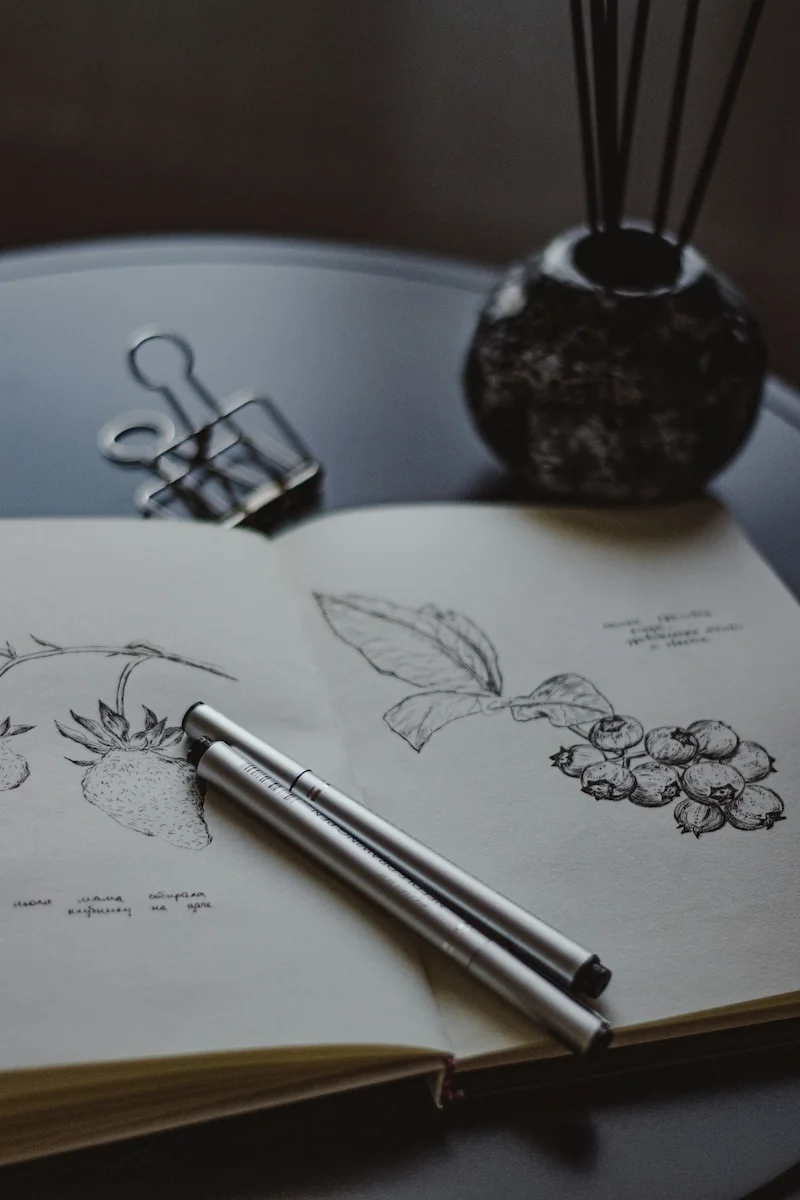
This isn’t a manifesto for the side-hustle. It isn’t a guide on how to turn your pottery into a boutique Etsy shop, nor is it a strategy for "monetizing your passions" until every ounce of joy has been squeezed into a spreadsheet. It refuses to be another "how-to" on maximizing your evening hours for the sake of your bank account. In fact, if there is any talk of profit here, it is only to warn you of how quickly a paycheck can act as a poison to the parts of you that were never meant to be for sale.
We have been conditioned to believe that a talent unused for gain is a talent wasted. We’ve been told that if we are good at something, we owe it to the market to package it. But some things are too important to be traded for currency.
The Quiet Thrill of the Unsold Work
There is a specific kind of dirt that doesn’t feel like a mess. It’s the blue smudge of cobalt pigment on the side of your thumb, or the scent of cedar shavings clinging to your wool sweater, or the faint, metallic tang of guitar strings on your fingertips. It is the evidence of a life being lived in the present tense.
When you are deep in a pursuit that has no destination, the clock on the wall loses its authority. You aren't "spending" time; you are inhabiting it. The kitchen table might be a wreckage of charcoal sketches, half-finished stanzas, or disassembled clock movements, but in that chaos, there is a profound order. It is the order of curiosity.
You aren't checking your inbox to see if the world has moved on without you. You aren't wondering how this specific shade of ochre will look through a smartphone lens. You are simply there, witnessing the friction between your hands and the medium. It is a rare, subversive act to do something purely because it feels right to do it, with no promise of an audience and no hope of a return on investment.
The Monetization Trap
The modern pressure to "hustle" is a thief. It sneaks into our garages, our gardens, and our journals, whispering that our sanctuaries should actually be sweatshops. It suggests that if you’re a decent cook, you should start a catering business; if you like to garden, you should sell your heirloom seeds.
This is what I call Optimization Fatigue—the bone-deep weariness that comes from feeling like every waking second must be leveraged for growth, status, or gold. When we attach a price tag to a hobby, the chemistry changes. The "Second Stream" of our calling becomes a secondary source of stress. Suddenly, the thing that was meant to heal us requires a marketing plan, a customer service temperament, and a consistent output.
"The moment a sanctuary becomes a storefront, it ceases to be a place where the soul can rest."
We have forgotten how to be truly unproductive. We feel a phantom limb of guilt when we spend four hours restoring an old radio simply because we wanted to hear the tubes hum. We call it "wasting time" because it doesn't move the needle on our professional identity. But this is a misunderstanding of what it means to be a human being. We are not just engines of output; we are vessels of experience. If you find yourself constantly living in "waiting room" mode—waiting for the next promotion, the next launch, the next milestone—you might be suffering from The Hidden Cost of Delayed Alignment.
The Luxury of the Low-Stakes Pursuit
A Second Stream is not a side hustle. It is a parallel pursuit where the only ROI is your own vitality. It is the garden you grow that you never intend to harvest for anyone but your own table. It is the language you learn that you may never speak in a foreign land, but which stretches the architecture of your mind.
There is a vital distinction between productivity and fruitfulness. Productivity is a linear measurement—how much did you make, and how fast? Fruitfulness is a quality of character. A fruitful life is one that has depth, shade, and sweetness. It produces things that cannot be measured by a KPI.
A Second Stream is a "low-stakes" arena. In your professional life, failure might mean a lost contract or a bruised reputation. But in your woodshop, a miscut joint is just a piece of scrap wood. It costs you nothing but a moment of reflection. This freedom to fail is the very thing that sustains the soul. It allows us to step out of the "performer" role and back into the "explorer" role. It is an act of Selective Stewardship, where you intentionally say "no" to the world's demands so you can say "yes" to your own inner fire.
The Freedom of Being an Amateur
The word amateur comes from the Latin amator—a lover. To be an amateur is to do something for the sheer love of it.
Imagine standing at a piano, knowing that the clumsy melody you’re chasing will never be recorded. You are free to be mediocre. You are free to play the wrong notes, to experiment with a rhythm that shouldn't work, to discard the whole thing by the time the sun goes down. There is no sting of financial loss in a discarded poem. There is no blow to the ego when a loaf of bread comes out of the oven too flat to eat.
When you remove the need for an audience, you remove the need for a mask. You don't have to curate your Second Stream. You don't have to explain it. You can be messy, uncertain, and wildly inconsistent. This is where true creative breakthrough happens—not under the lash of a deadline, but in the dappled light of play. If you've been feeling trapped by your own professional success, you might recognize what I call The Golden Cage. The antidote isn't more success; it's more play.
The Sanctuary Framework
To protect this space, you need what I call the Three Pillars of Protection. Without these boundaries, the professional world will eventually colonize your joy.
- Non-Transactionality: This is the ironclad rule. No money changes hands. You do not sell the work. You do not trade it. You do not accept commissions. The moment money enters the room, the "employer" enters with it. Keep your Second Stream purely for your own consumption or for no-strings-attached gifts.
- Privacy: You do not have to post it on social media. In fact, for the first year, I recommend you don’t. When we perform our hobbies for an algorithm, we subconsciously start creating for the "like" rather than the "life." Keep your sketches in a drawer. Keep your recordings on a private drive. Let it be yours alone.
- Persistence: This isn't about "grinding." It’s about returning. It’s about showing up to the easel or the workbench regardless of whether you feel "inspired." The goal isn't a masterpiece; the goal is the practice of being present with yourself.
By maintaining these pillars, you create a Personal Integrity System that respects your energy rather than just your output. You treat your inner life as something worthy of defense.
Drawing the Line in the Sand
If you want to reclaim your soul from the market, you have to draw a literal line. Look at your current interests. Which one feels the most "sacred"? Which one makes you lose track of time? Decide, right now, that this one pursuit will never be for sale.
Then, find a physical space for it. If your professional life happens on a screen, your Second Stream should ideally be analog. Use your hands. Feel the weight of a chisel, the texture of heavy paper, or the resistance of soil. This physical separation helps your nervous system understand that "work mode" is off.
I often suggest a 30-Day Unproductive Challenge. For one hour a week, engage in your Second Stream with the explicit goal of producing nothing of value. Spend the hour mixing colors you intend to throw away. Spend it practicing a single scale on the cello. Spend it researching an obscure historical event that has no bearing on your career. Your only job is to be there, curious and unhurried.
Inventory of the Unseen Self
Ask yourself: If I knew that no one would ever see the work I did tonight, how would that change the way I approached it?
Most of us have a "marketable" version of ourselves—the version that is articulate, efficient, and reliable. But there is an "unseen" self that is much weirder, much more fragile, and much more interesting. This part of you doesn't care about your job title or your LinkedIn endorsements. It cares about why the light hits the floor at 4 PM, or how a certain chord progression feels in the hollow of your chest.
"We spend our lives building a resume, but we live our lives in the margins between the bullet points."
When you stop trying to "get ahead" in the eyes of society, you finally have the chance to catch up with yourself. You might find that the part of you you’ve been hiding—the "unproductive" part—is actually the part that holds your greatest wisdom. This is the transition from being a person of Utility to a person of Sage. It is a move from being useful to being meaningful.
The Gift of the Private Fire
In a world that demands we all be influencers, be a secret instead.
There is a quiet, steady heat in a life that has a private fire burning in the center of it. People will notice the warmth, even if they never see the flames. They will notice that you seem less hurried, less desperate for validation, and more grounded in a reality that doesn't rely on a WiFi connection.
Your soul doesn't need a business plan. It doesn't need a "pivot strategy" or a brand identity. It needs space to breathe without being sold. It needs the cobalt smudge on your thumb and the cedar shavings on your floor. It needs you to remember that the most important work you will ever do is the work that no one will ever pay you for.
The paint is drying. The house is quiet. The world is waiting for you to produce something, to ship something, to be something. But for now, you can just be here. You can stay in the wreckage of your curiosity, tending the embers of a calling that is yours and yours alone.
Design Your Inner Rhythm
If you’re ready to stop performing your life and start living it, we invite you to explore the tools we’ve built for intentional reflection. You can discover your insights through our guided tools or take the first step toward a more aligned year by using our Design Your Year assessment. Whether you’re protecting a hobby or rethinking a career, we’re here to help you tend the fire.
Written by
Preston KanakPreston Kanak is a filmmaker, educator, and creative entrepreneur who is deeply passionate about building spaces rooted in authentic connection rather than surface-level networking. He believes in the power of shared purpose and the transformation that happens when people gather around what truly matters. His work and communities are shaped by the idea that life is meant to be lived with intention, curiosity, and heart. At his core, Preston is driven by wellness, creativity, and meaningful reflection. He comes alive when he’s exploring new ways to move his body, developing fresh ideas, or carving out quiet space to think and reconnect with himself. He thrives on variety and learning, while also valuing the stability that allows him to explore freely. Making a positive impact and seeing others resonate with his work is what keeps him energized and committed to his path. Preston is currently focused on The Living Year Project, an ongoing exploration of health, fitness, and sustainable habits designed to help people live each year with greater clarity, energy, and purpose. Through this work, he studies how small, consistent shifts can create powerful long-term change. His mission is to help others rediscover what lights them up and design lives that feel deeply aligned with who they are becoming.
Stay Updated
Get new articles in your inbox
No spam. Unsubscribe anytime.